SEER2 — Seasonal Energy Efficiency Ratio 2 — measures how much cooling a system delivers per watt of electricity it eats, averaged across a simulated season. The “2” matters: the current test runs at higher external static pressure than the old one, which mimics real ductwork instead of a lab bench. A system’s SEER2 number reads lower than its old SEER would have — around 4 to 5 percent — without the equipment changing at all. Comparing a new quote’s SEER2 to your old unit’s SEER is apples to slightly different apples.
The California floor
Current federal standards split the country into regions, and the Southwest region — which includes California — sets the efficiency floor for new AC installations at a level that’s effectively eliminated the budget bottom tier. In practice: every legitimate new install here is already reasonably efficient. The quote ladder starts at code and climbs from there — each rung costing more up front and less per summer.
The valley payback math
Efficiency upgrades pay back through run hours — and run hours are what the Inland Empire has in abundance. A system here can log six months of cooling a year, roughly double a mild-climate system’s season. That means the same efficiency step saves about twice the annual dollars here as it would on the coast, and the break-even on the premium arrives in half the time. The system that costs least to own in this valley is rarely the one that costs least to buy.
What actually changes as you climb
- Single-stage to two-stage: the system gains a lower, steadier gear — longer cycles, better humidity handling, quieter operation, fewer start-stop wear cycles.
- Two-stage to variable-speed: the compressor modulates across a range instead of stepping — the comfort difference is real, the savings incremental.
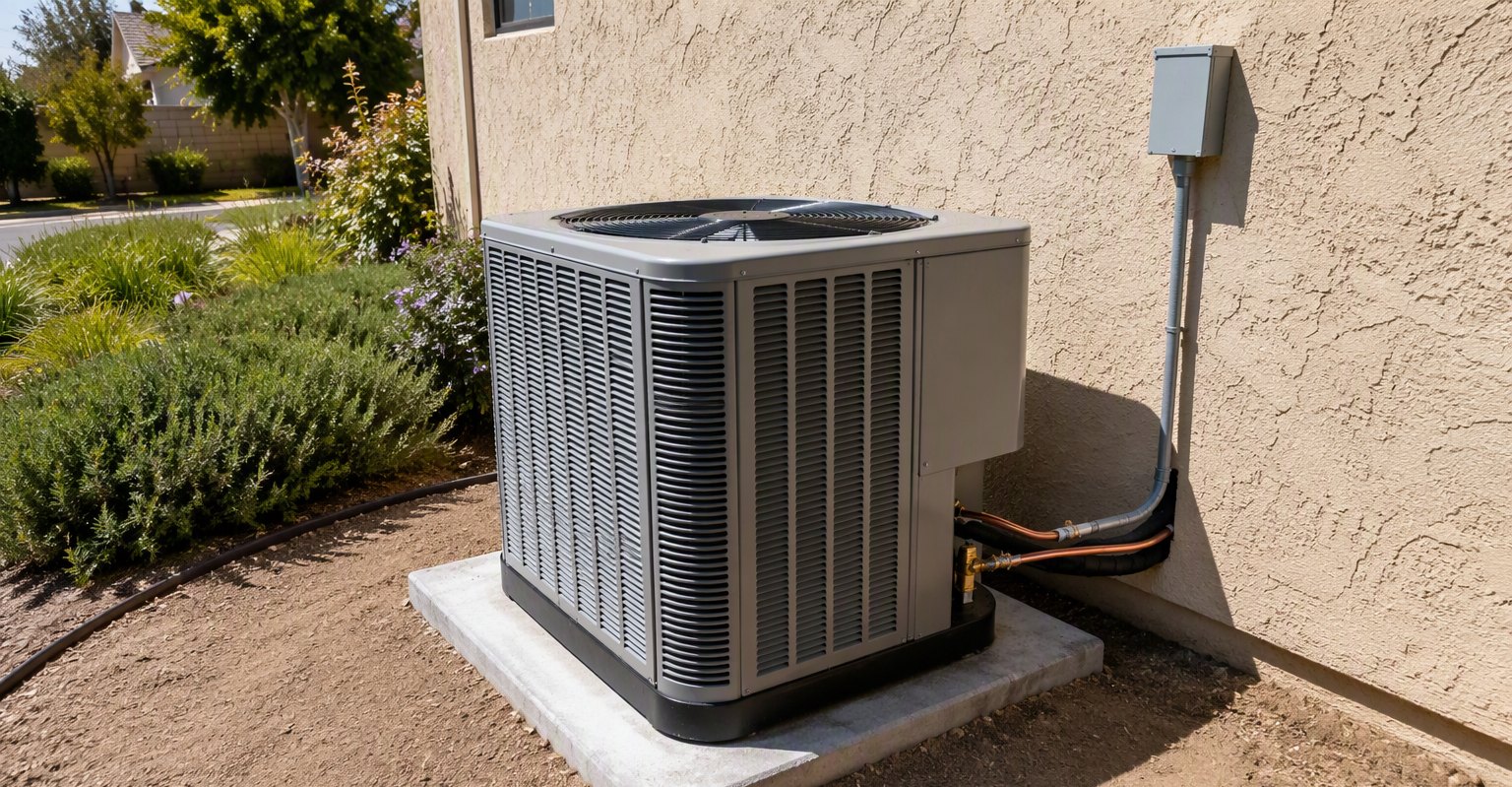
- Matched equipment: the rated efficiency only holds when indoor and outdoor units are a matched set — a new condenser on an ancient air handler delivers neither the rating nor the comfort.
The honest answer
For most Riverside homes, the mid-tier two-stage rung is the sweet spot: meaningful savings over the floor tier, most of the comfort gains of the top rung, and a payback period measured in summers you’ll actually own the house. The ultra-premium tier pencils out on big homes with heavy run time or owners playing the twenty-year game. The quote should show price difference and projected savings side by side — if it shows only the monthly payment, ask for the other page.
Staring at a quote ladder? Call (951) 364-5335 — the Crew prices the tiers with real numbers and tells you which rung your house actually justifies.