Warm air from the vents feels like one problem. It’s actually five wearing the same costume, and the price difference between the lightest and heaviest is a factor of ten. Here’s the lineup, in the order the route sees them.
1. The choked filter (check this first)
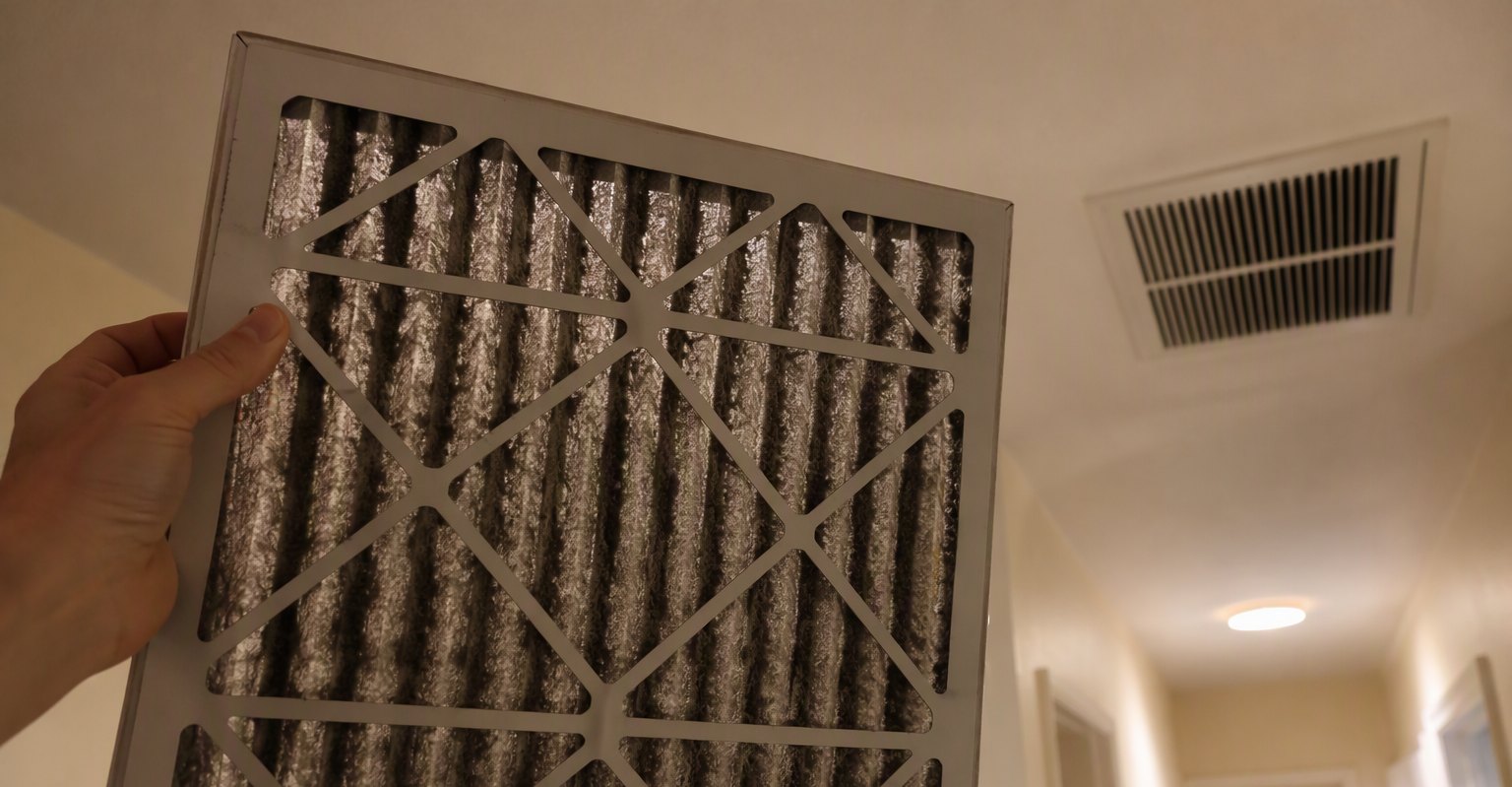
A filter loaded solid with Santa Ana dust strangles airflow across the indoor coil. The coil gets too cold, freezes into a block of ice, and airflow drops to a warm trickle. The check: pull the filter and hold it to the light. If light barely passes, that’s your answer — new filter, system off for a few hours to thaw the ice, then restart. If ice was involved, that thaw is not optional; running a frozen unit risks the compressor.
2. The dead capacitor (the valley’s favorite)
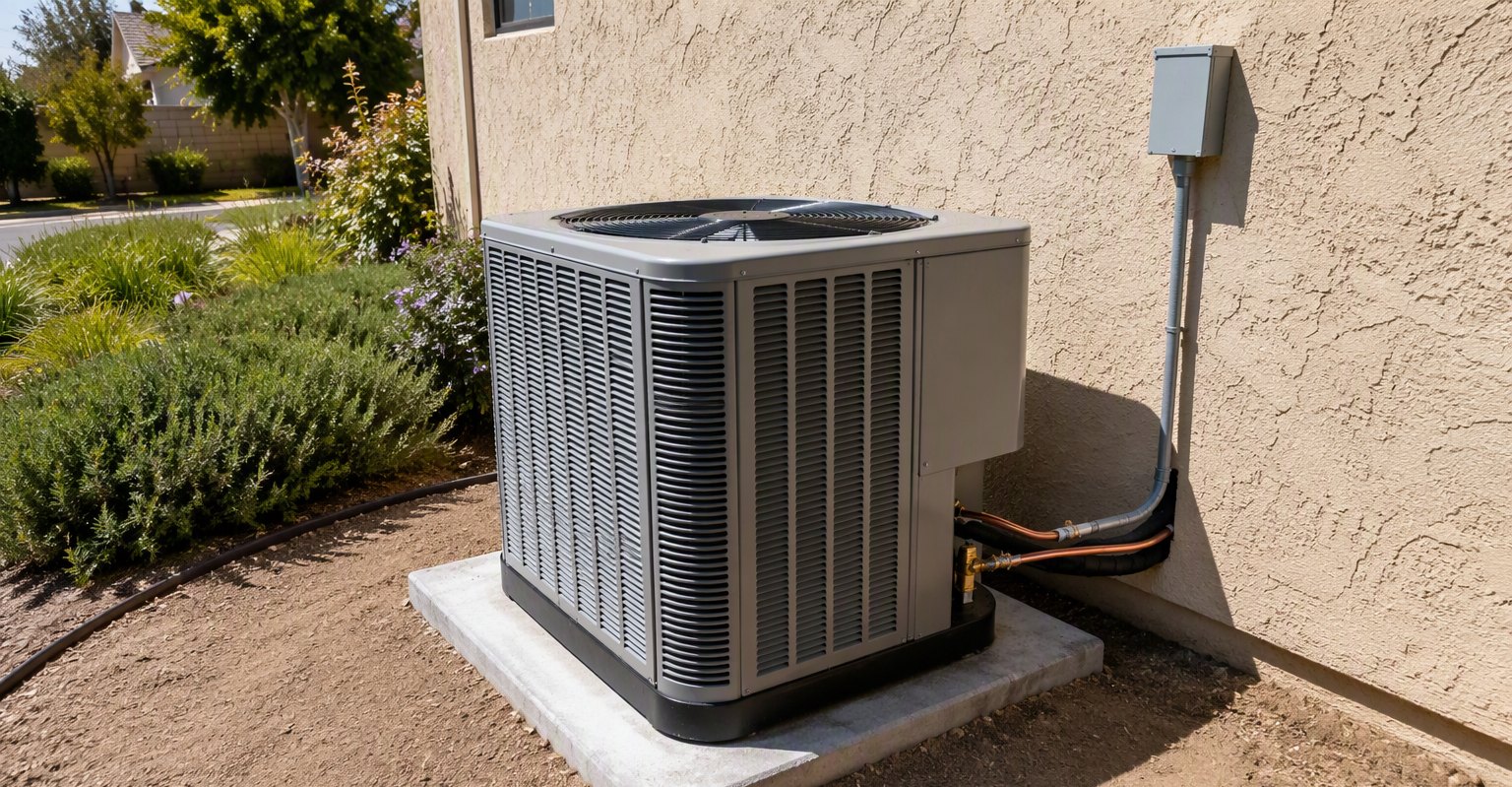
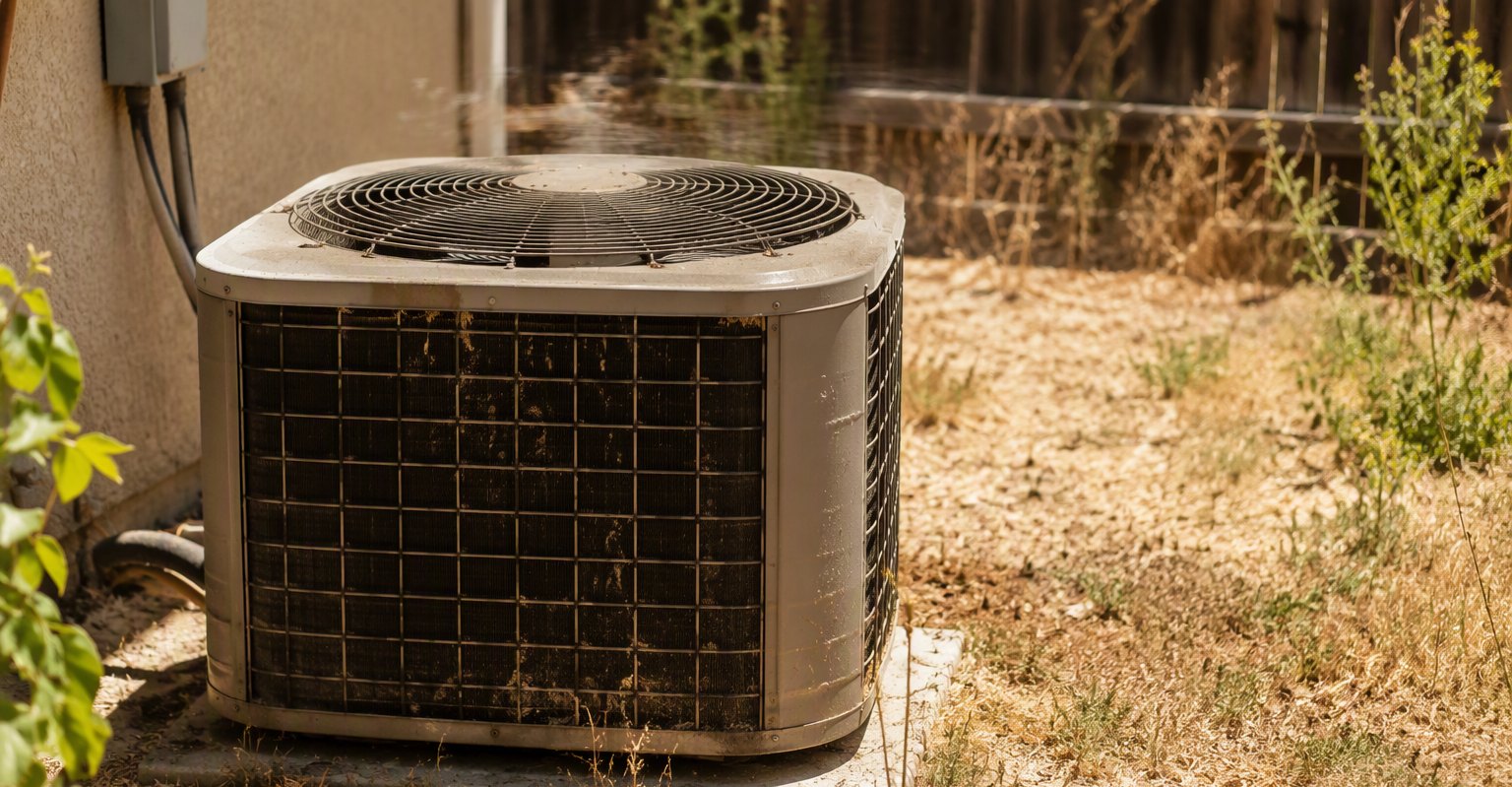
The capacitor is the part that starts the compressor and the outdoor fan, and heat kills them slowly — every Riverside summer cooks a few percent off, until one July afternoon the condenser just hums. The tell: the outdoor unit buzzes but the fan doesn’t spin, or the fan spins with a stick nudge (don’t). This is the single most common repair on the route, it’s a truck-stock part, and it’s the lightest bill on this list by a wide margin.
3. The worn contactor
The contactor is the switch that sends power to the condenser when the thermostat calls. Its contacts pit and burn over thousands of cycles until they can’t carry the load — the indoor unit runs, the outdoor unit stays silent. Another modest, same-visit repair — and another reason the indoor fan blowing warm air doesn’t automatically mean doom.
4. Refrigerant loss
Refrigerant isn’t consumed; if it’s low, it leaked. The signs: gradual cooling decline over weeks, ice on the copper lineset, a faint hiss, or an oily film on a fitting. The honest repair is find-and-fix the leak, then recharge to spec — a top-off without the leak fix is money vented to the sky, and anyone selling it without that conversation is selling next month’s callback.
5. The compressor
The heavy one. When the pump at the heart of the system fails, you’re at the repair-replace crossroads — and the right answer depends on the system’s age and refrigerant type, not on fear. On a young system, a compressor can be worth it. On a fourteen-year-old unit, the math usually points elsewhere. Either way, you should see the readings that prove it’s actually the compressor before that conversation starts.
Warm air and rising panic? Call (951) 364-5335 — the diagnostic finds which of the five it is, and the flat quote follows the proof.