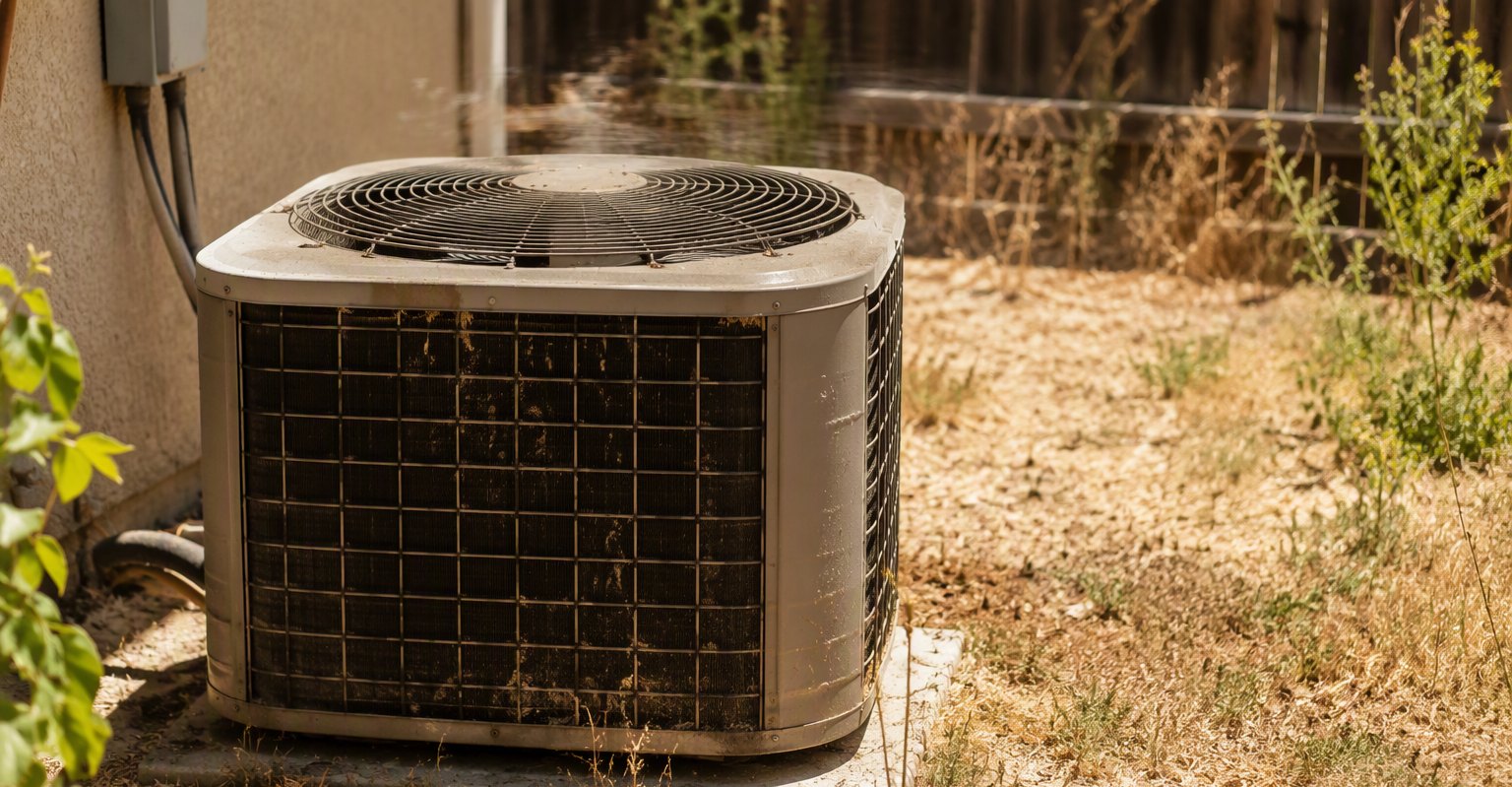
The 90-day guideline assumes average dust, average run time, and average air. The Inland Empire delivers none of the three. Summer means the system runs six months straight, pulling every cubic foot of indoor air through that filter around the clock. Fall means the Santa Ana season — days of wind-driven fine dust pushing into every gap in the building envelope, all of it eventually meeting the filter. And spring brings the pollen load on top. The filter here doesn’t live an average life; it lives a hard one.
The cadence that fits the valley
- Summer run season (May–October): check monthly, expect to change monthly to every-other-month. The system is running daily; the filter is working full-time.
- Santa Ana season (fall wind events): check after every major wind stretch. A week of Santa Anas can load a filter the way a calm month does.
- Winter quiet season: the 60-to-90-day range finally applies — the system runs little and the air is calm.
- Smoke weeks: after any stretch of wildfire smoke, change it regardless of age. What it caught is exactly what you don’t want recirculating.
The light test settles every argument
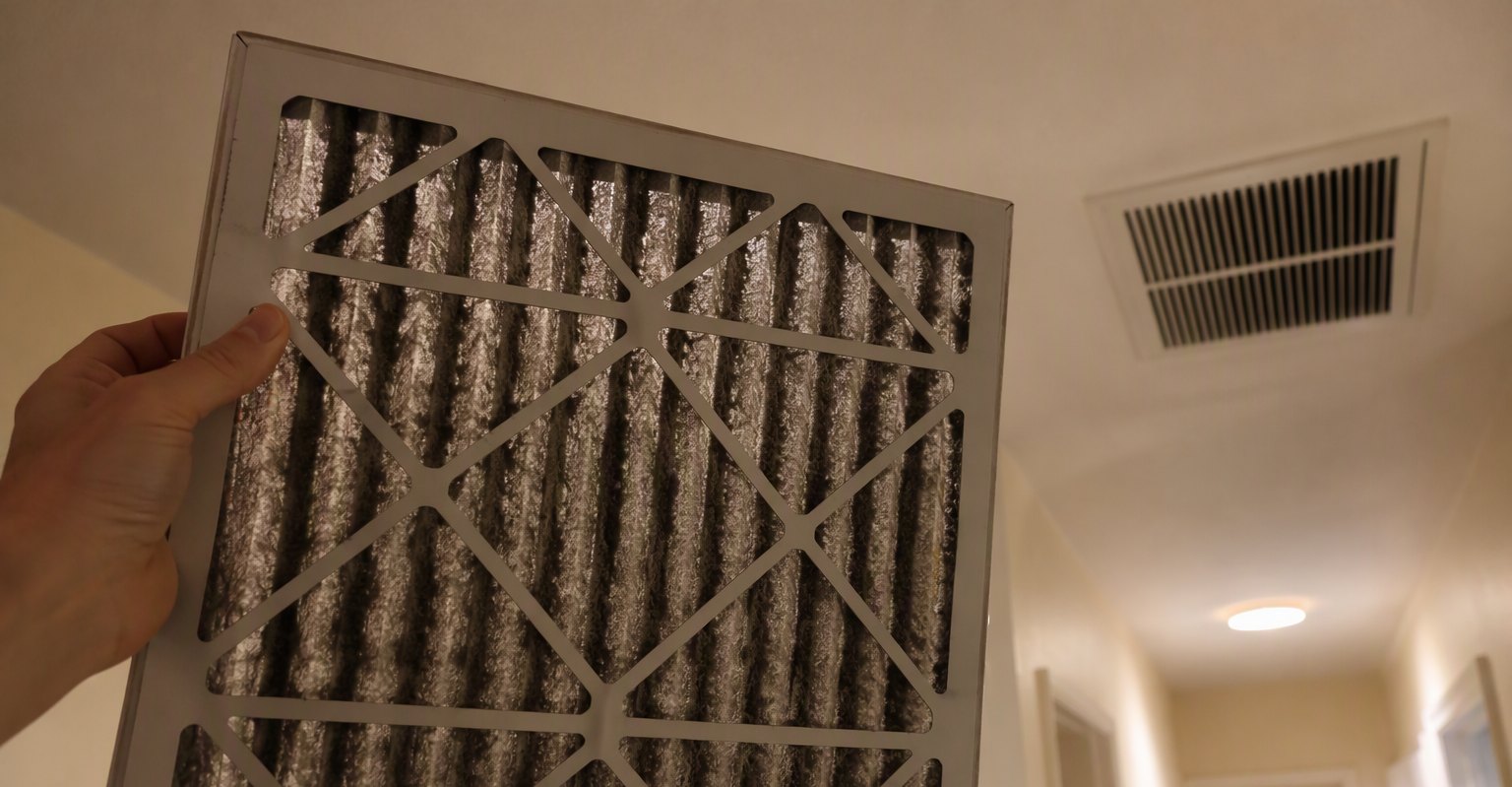
Pull the filter and hold it up to a light or a window. Light passing clearly through the pleats means it has life left. A gray-brown mat that blocks the light means it’s done — regardless of what the calendar says. The calendar reminds; the light test decides.
Why it matters more than people think
A choked filter starves the system of airflow, and airflow starvation is the root of the two most expensive failures on the route. In cooling, low airflow lets the indoor coil freeze into ice — and running a frozen system risks liquid refrigerant reaching the compressor, the one component whose failure rewrites the household budget. In heating, low airflow overheats the heat exchanger — tripping limits, stressing metal, shortening furnace life. The five-dollar filter stands in front of both. Meanwhile the MERV rating conversation is its own topic: most valley homes do well in the MERV 8-to-11 band — enough to catch the dust, not so tight the blower strains against it.
Filter’s fine but the house still won’t cool? Call (951) 364-5335 — the diagnostic reads the rest of the airflow story.