Cold-climate furnaces wear out from work. Mild-winter furnaces fail from rest — ten idle months of dust settling on flame sensors, oxidation creeping across connectors, and spiders homesteading in vent lines. Then one December evening the thermostat calls, and the sequence that ran fine in February has opinions. These are the five signs the furnace is telling you something.
1. It lights, runs three seconds, and quits — repeatedly
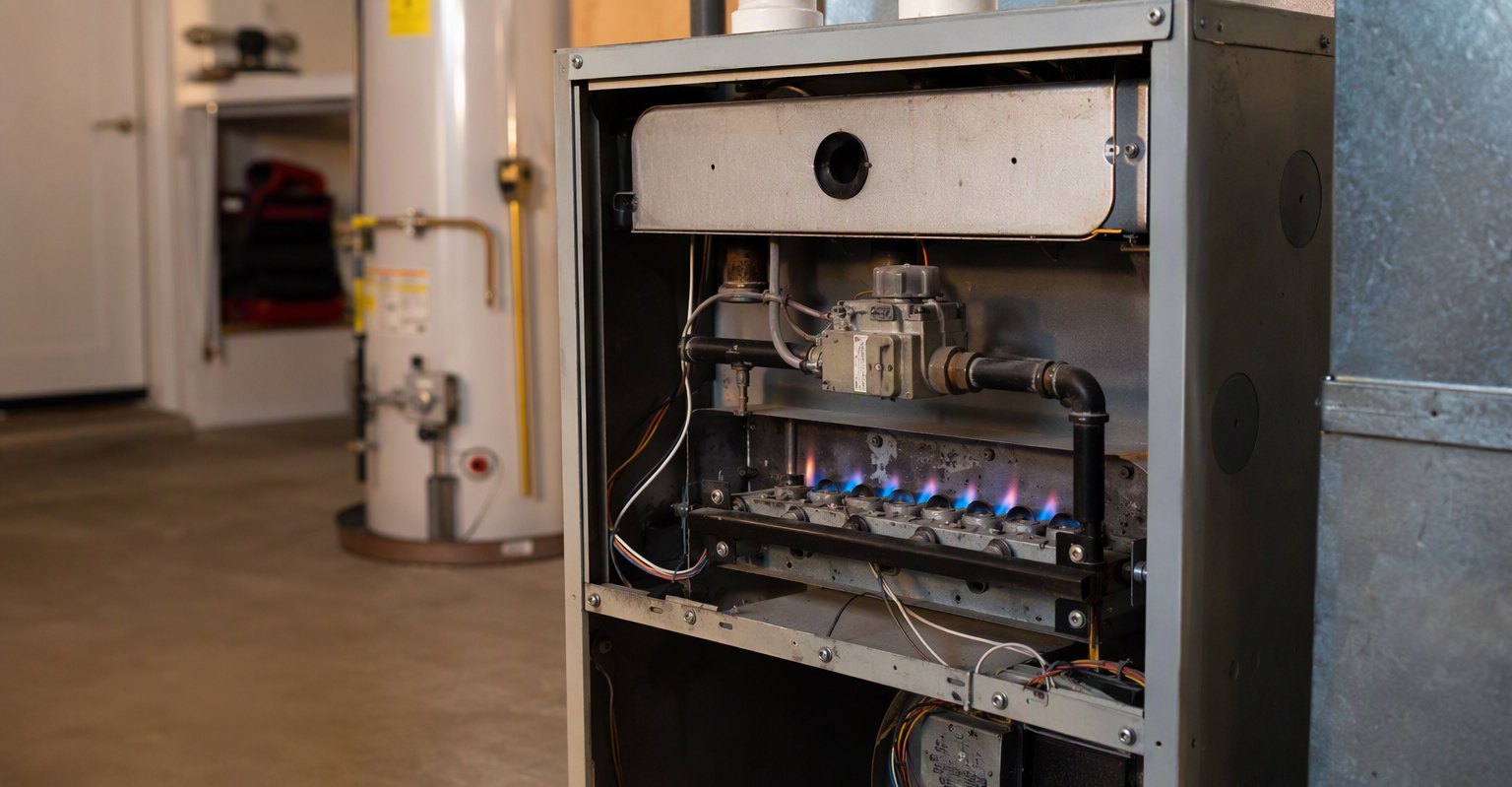
The signature move of the fouled flame sensor. The burner lights, the sensor can’t prove flame through its coat of oxidation, and the control board shuts the gas for safety — then retries, same result. It’s the most common mild-climate furnace failure there is, and the fix is fast and modest: the sensor gets cleaned or replaced, and the ten-month dust bath is the reason it needed it.
2. Clicking with no fire
The igniter’s glow is what lights the gas, and hot-surface igniters are fragile — they age with cycles and crack with time. Repeated clicking or a glow that never arrives means the burner never lights, and the furnace locks out after a few tries. A truck-stock part and a short visit in most cases.
3. The burning smell that doesn’t leave
One burning smell is normal: the first fire of the season burns ten months of dust off the heat exchanger, and it fades within the hour. A burning smell that persists beyond that first run — or anything reading metallic, electrical, or like rotten eggs — is not the dust conversation. Shut it down; call. Gas smells mean leave the house first and call from outside.
4. Short cycling — fire, quit, fire, quit
The furnace fires, runs a couple of minutes, shuts off before the house warms, then repeats. The usual suspects: a choked filter overheating the unit and tripping its limit switch (the five-dollar check first), a failing flame sensor, or a limit switch itself going soft. Chronic short cycling beats up the heat exchanger — the expensive part — so this one rewards speed.
5. New noises at fire-up
A boom or whomp at ignition is delayed ignition — gas pooling before it lights, usually from dirty burners. Rattles and squeals point at the blower side. Mild-winter furnaces announce these after the long sleep; the first few runs of the season are when to listen. Any of them earns a look before the nightly schedule starts.
The October ritual that prevents all of it
Run the furnace for fifteen minutes on a mild October evening. You’ll smell the one-time dust burn-off, you’ll confirm it lights and stays lit, and any failure shows up while the calendar is friendly — a small fix in October instead of a December emergency call with the house at 55 degrees.
Any of the five sounding familiar? Call (951) 364-5335 — the diagnostic finds which one it is, and the common parts ride on the truck.